
Fifty and Still Racing: What Two Decades of Training Taught Me About Optimizing the Over-50 Male
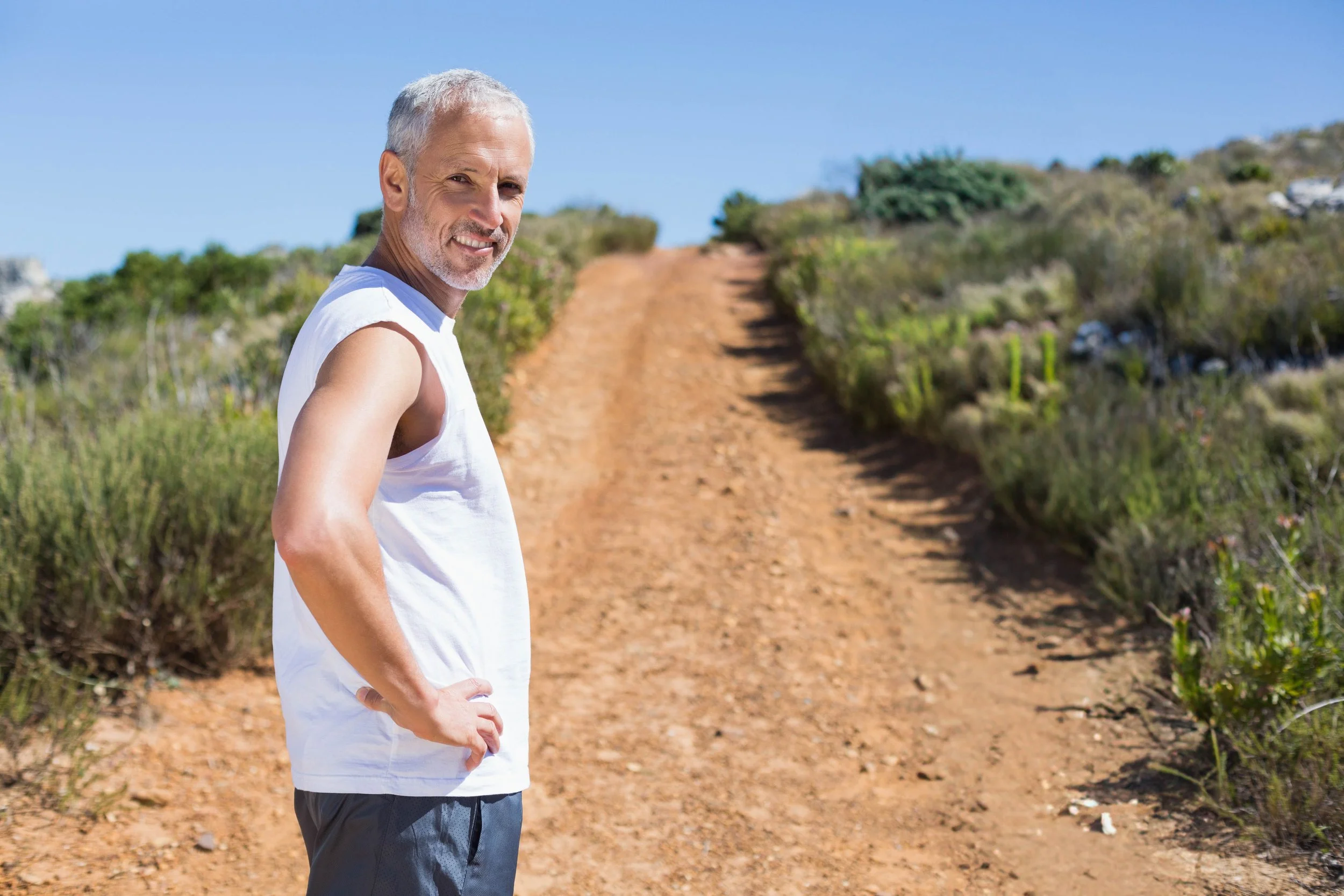
Much of what I know began in conventional textbooks and classrooms — the foundational science of physiology, nutrition, and medicine. But the real optimization came afterward, through years of continued education, self-study, and honest trial and error measured against one unforgiving metric: my own performance on the bike. As a naturopathic physician who still lines up for competitive cross-country mountain bike and gravel events in my fifties, I've learned that the strategies keeping me competitive are often the same ones that keep my patients healthy for the long haul — but not always. Understanding where those two goals overlap, and where they diverge, is the heart of optimizing the aging male.
These aren't gentle rides. Cross-country and gravel racing mean high-intensity efforts over relentlessly undulating elevation, punctuated by technical forest singletrack and rock gardens navigated at speed. The demands are anything but steady — surging power up climbs, sharp focus through descents, and hours of accumulated fatigue. That kind of variable, high-output effort exposes every weakness in your fueling and recovery, which is exactly why it's taught me so much.
My training evolution mirrored my nutritional one. Early on, it was self-guided guesswork — riding on feel, cobbling together a schedule, hoping I was doing the right work. The turning point came when I adopted a smart trainer and structured, machine-learning-driven programs like TrainerRoad, which brought precision and progression to my training that guesswork never could. But the tool matters less than the principle behind it: set a plan and stick to it. Consistency, structure, and follow-through beat sporadic bursts of enthusiasm every time — in training and in health.
My Nutritional Evolution
Like many athletes, I went looking for the "perfect" diet and tried them all. I spent time deep in ketogenic eating and appreciated its metabolic flexibility and steady energy. I shifted toward a Mediterranean low-carb framework for its cardiovascular and anti-inflammatory benefits, then borrowed paleo principles to clean up food quality and remove the processed noise.
What I eventually learned is that no single diet wins. The real breakthrough came when I stopped eating one way all the time and started matching my fuel to my demands. On rest and recovery days, I stay lower-carb and let my body run on fat. But for hard training blocks and race day, I use targeted, high-quality carbohydrates — because trying to race a two-hour cross-country lap or a long gravel grinder on ketones alone is a recipe for bonking on the climb. Working out precise carbohydrate fueling for specific events — grams per hour based on duration and intensity — transformed both my results and my recovery. Performance nutrition is math, and the math is different from your everyday plate.
Performance Versus Longevity
Here's the distinction I share with every man over 50 who walks into my office: training for performance and training for longevity are not the same thing. Some supplements and strategies push raw output. Others protect the mitochondria, the muscle, and the years ahead. The best plan borrows from both.
For the longevity and cellular energy side, I lean on a handful of well-supported agents:
Nicotinamide riboside — an NAD+ precursor that supports mitochondrial function, which naturally declines with age.
EGCG (green tea catechin) — antioxidant and metabolic support.
Alpha-ketoglutarate — an emerging longevity compound involved in cellular energy and healthy aging pathways.
For performance and recovery, my go-to list includes:
Beetroot — dietary nitrates that support blood flow and endurance output.
Tart cherry — for recovery, reduced inflammation, and better sleep.
Creatine — perhaps the most evidence-backed supplement in existence, valuable not just for strength but for muscle preservation and cognition in aging men.
HMB (beta-hydroxy beta-methylbutyrate) — helps preserve lean muscle, which becomes critical as sarcopenia risk climbs after 50.
The Unglamorous Fundamentals
No supplement stack rescues a poor foundation. Adequate sleep is non-negotiable — it's where hormones rebalance and tissue repairs. Stretching, mobility, and intentional recovery matter more every year; the older athlete who skips them pays in injuries. And electrolytes deserve real attention, especially for those who sweat hard. I make sure I'm replacing sodium, potassium, magnesium, and calcium — not just chasing water. Magnesium in particular is a quiet workhorse for muscle function, sleep, and cardiovascular health, and many men are deficient without knowing it.
Sodium deserves a special mention. What surprised me most in my own racing is just how variable sodium loss is from athlete to athlete — and even in the same athlete across different conditions. Some of us are "salty sweaters" who lose enormous amounts, and on a hot, high-intensity gravel day that deficit adds up fast. Get it wrong and the consequences are real: debilitating muscle cramps that can end a race, plummeting performance, and that hollow, heavy-legged feeling that no amount of willpower overcomes. I've learned to dial in my own sodium replacement carefully, and I now help patients and athletes understand their individual sweat and sodium needs rather than guessing. It's one of the most overlooked and correctable causes of poor endurance performance.
The Takeaway
Optimizing health after 50 isn't about chasing your 25-year-old self. It's about training smart, fueling with intention, protecting your muscle and mitochondria, and respecting recovery. It's also about structure — setting a plan and honoring it, whether that plan comes from a coach, a smart trainer, or a physician who understands where you're trying to go.
But I'd be remiss to leave out the most important ingredient of all: finding genuine fun and enjoyment in the journey. Whether you're chasing a podium or simply riding for the joy of it, the men who thrive long-term are the ones who love what they're doing. Health that feels like punishment never lasts. Health built on something you genuinely enjoy becomes a lifestyle — and that's what carries you into your sixties, seventies, and beyond.
I'm living proof that you can still compete — and more importantly, still thrive — well into your fifties and beyond. If you're ready to build a personalized plan that honors both your goals and your years, I'd love to help you get there.
This article is for educational purposes and is not a substitute for individualized medical advice. Please consult your physician before beginning any new supplement or exercise program.
**Medical Disclaimer** Please note that the information provided in this blog post is for educational and informational purposes only. It is not intended as a substitute for professional medical advice, diagnosis, or treatment. Always seek the advice of your physician or other qualified health provider with any questions you may have regarding a medical condition. Never disregard professional medical advice or delay in seeking it because of something you have read in this blog post.